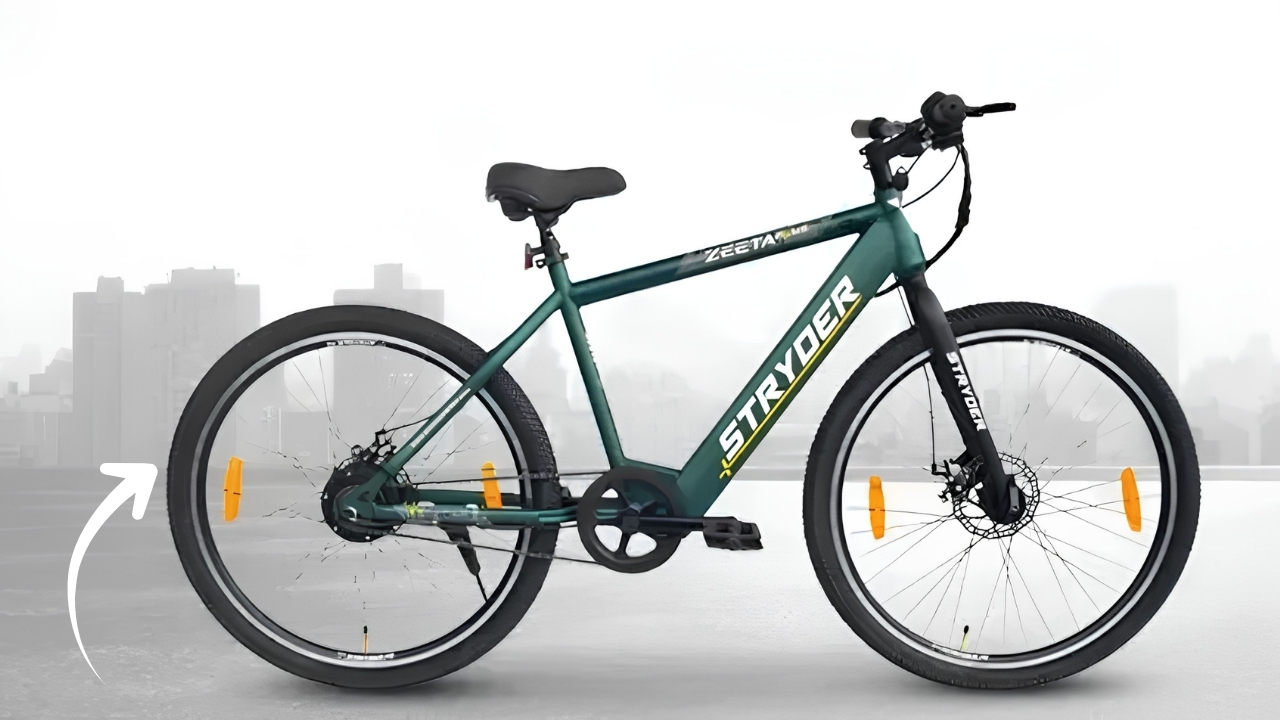
Tata E-Cycle : Tata Group-backed Stryder Cycle has expanded its presence in India’s growing electric bicycle market with the introduction of two new e-bikes, the Airborne and Arcus.
The launch reflects a wider shift in how city commuters are approaching short-distance travel, especially at a time when traffic congestion, fuel costs and concerns about air quality are influencing everyday mobility choices.
Rather than positioning these vehicles as replacements for motorcycles or electric scooters, Stryder appears to be targeting a different kind of rider: people travelling to offices, colleges, neighbourhood markets, metro stations and other nearby destinations.
The idea is simple—make daily commutes easier without removing the flexibility and health benefits associated with cycling.
Stryder is a Tata Enterprise and has long been known in India’s bicycle segment. With the Airborne and Arcus, the company is pushing further into electric-assisted cycling, a category that sits between conventional bicycles and motorised two-wheelers.
The two models were introduced in April 2026, adding fresh options for riders who want powered assistance for regular urban journeys.auto.
Designed for the Daily Commute
The new e-bikes have been developed around practical use rather than extreme performance. They are intended for city riding, quick errands, leisure trips and short daily commutes where a conventional bicycle may feel tiring, especially in heat, traffic or on uneven roads.
Electric assistance can make a noticeable difference for riders who need to cover several kilometres before work or class. It may also appeal to people who want to cycle but are concerned about arriving tired or sweaty.
In that sense, an e-cycle offers a middle path: riders can pedal as much as they want while relying on electric support when needed.
The Stryder Airborne has been positioned as the more premium of the two new e-bikes, while the Arcus is designed as a comparatively accessible option.
Both models are aimed at people who value a compact, low-running-cost mode of personal transport for local travel. According to reports on the launch, the e-bikes offer multiple riding modes and are built around the needs of modern urban users.
The appeal of such products is particularly strong in crowded Indian cities, where travelling a short distance by car or motorcycle can often take longer than expected.
An electric cycle does not solve every commuting problem, but it can reduce dependence on fuel-powered vehicles for trips that do not require high speed or long range.
Range, Charging and Riding Experience
One of the key highlights of the Stryder e-bike announcement is the claimed riding range of up to 60 kilometres on a single charge for the line-up, depending on model, riding conditions and assistance use. This range is suitable for many urban riders whose total daily commute falls well within that distance.
Actual performance, however, can vary. A rider’s weight, road gradient, tyre pressure, traffic conditions, stop-start riding and the chosen electric-assist mode all affect how far an e-cycle can travel before needing to be recharged.
Frequent use of high assistance is likely to reduce the usable range, while pedalling actively and selecting a lower assistance mode can help extend it.
Charging convenience is another important factor. Unlike a conventional electric scooter, an e-cycle is generally lighter and less intimidating for first-time electric-vehicle users.
For someone living in an apartment, hostel or independent home, the ability to recharge the battery without visiting a fuel station can be a major advantage.
Reports on Stryder’s electric-cycle portfolio have also highlighted lithium-ion battery technology, hub-motor assistance and a top speed designed to remain within the typical e-cycle category.
The focus is not on chasing motorcycle-like speed; it is on making pedalling more comfortable and helping riders cover local distances with less effort.
Why the Launch Matters
India’s electric-mobility conversation is often dominated by electric cars, scooters, buses and commercial vehicles. Yet electric bicycles have a useful role to play because they can serve trips that are too long to walk comfortably but too short to justify taking a car, taxi or petrol-powered two-wheeler.
For students, delivery workers, office commuters and senior citizens who remain comfortable riding a bicycle, an e-cycle can be a practical alternative.
It can also support first- and last-mile connectivity, allowing commuters to travel between home and a bus stop, metro station or railway station without depending on an auto-rickshaw for every short ride.
Stryder’s launch also signals that established cycle brands are taking the electric segment more seriously. The presence of a Tata Group-backed brand may add familiarity for buyers who are cautious about product quality, service availability and battery reliability.
The company has said the models are meant to support eco-friendly travel while addressing everyday concerns such as traffic and urban congestion.
That said, buyers should not treat an e-cycle as a one-size-fits-all transport solution. A person who travels long distances at high speed, rides extensively on highways or regularly carries heavy loads may be better served by an electric scooter or motorcycle.
An e-cycle is most effective when used for moderate-distance trips in city neighbourhoods, campuses, gated communities and mixed-traffic local roads.
A Step Toward More Flexible Mobility Tata E-Cycle
The arrival of the Airborne and Arcus comes at a time when Indian consumers are becoming more open to electric mobility in different forms.
While larger EVs receive more attention, small electric vehicles may have an equally meaningful impact on day-to-day travel habits.
For many users, the biggest benefit may not be technology alone. It may be the freedom to leave home for a nearby destination without worrying about petrol, parking, traffic delays or the physical strain of a fully manual cycle ride.
Stryder’s latest e-bikes show that the future of mobility does not have to be limited to large, expensive vehicles. Sometimes, a quieter and simpler solution can be the most useful one.
Also Read this – Oppo A6 Pro come with 7800 mAH battery and rear 250MP Camera in low budget cost
By combining familiar bicycle design with electric assistance, Tata Group-backed Stryder is trying to make short urban journeys more convenient, cleaner and more accessible for a wider range of Indian riders.