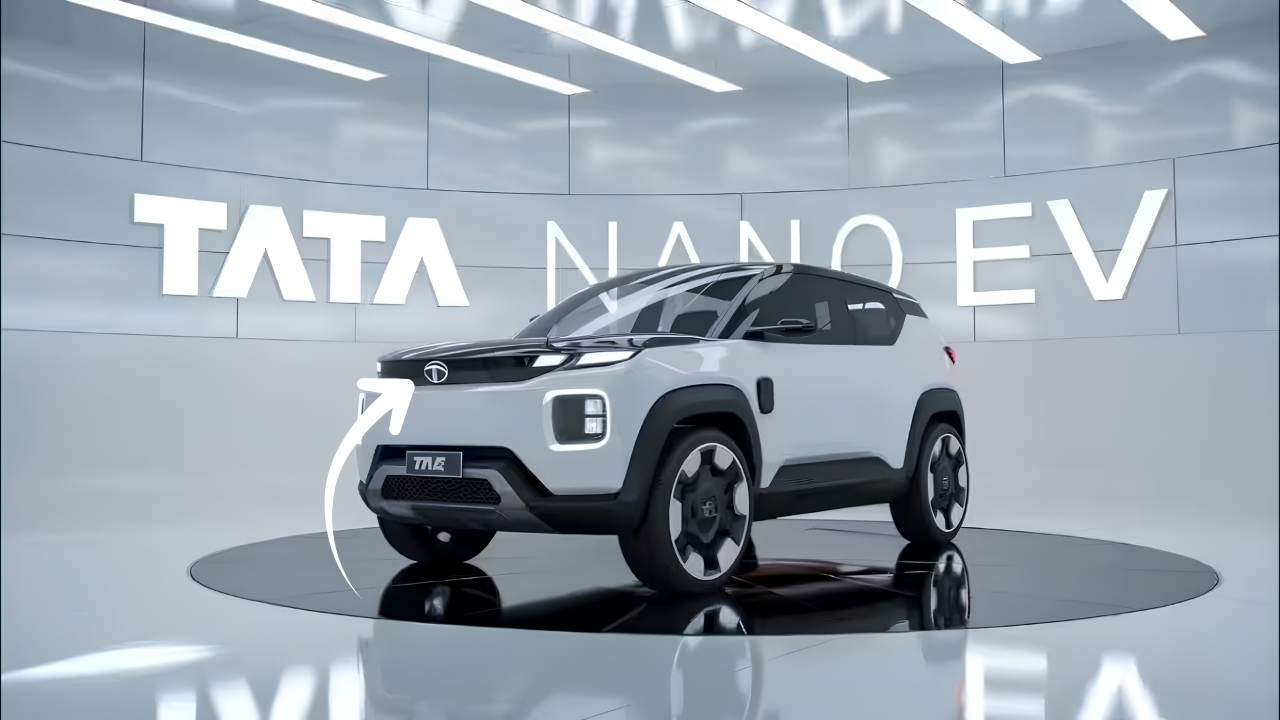
Tata Nano EV : The Tata Nano name is once again generating excitement among Indian car buyers, this time with the possibility of an electric comeback.
However, it is important to separate confirmed information from online speculation: Tata Motors has not officially announced a production-ready Tata Nano EV, a launch date, technical specifications, or a price.
Recent remarks from Tata Motors India Design Head Ajay Jain have revived the discussion. When asked about bringing back the Nano, Jain expressed interest in the possibility of an electric version in the future.
His comments have encouraged enthusiasts, but they should not be treated as confirmation that the vehicle is currently approved for production.
A Familiar Name Returns to Headlines
For many Indians, the Tata Nano is more than an old hatchback. It represents one of the boldest attempts to make personal car ownership accessible to a wider audience.
When it arrived, the Nano was positioned as a practical, compact vehicle for families moving from two-wheelers to four-wheelers.
Its journey was not simple. The original Nano became famous for its extremely low-cost positioning, but that image also created challenges.
Buyers often wanted an affordable car without feeling that they were choosing something basic or compromised. Production was eventually discontinued, yet the model’s recognition never disappeared.
That continuing public memory is one reason the Nano EV idea has received so much attention. In today’s market, the same compact dimensions that once defined the Nano could suit a different purpose: easy urban travel, low running costs, and simpler parking in crowded cities.
What Tata Motors Has Actually Said
The current buzz largely comes from comments attributed to Ajay Jain, Tata Motors’ India Design Head. In a media interaction, he indicated that he would like to see the Nano return and suggested an electric avatar as a possible direction.
That is an encouraging signal for fans of the nameplate, but it is not the same as a corporate announcement. Tata Motors has not released a product teaser, launch calendar, battery details, platform information, or official images for a Nano EV.
Reports that give exact range figures, equipment lists, or projected launch dates remain estimates made by automotive websites and enthusiasts rather than confirmed company information.
This distinction matters. The auto industry often explores multiple concepts, design directions, and customer segments long before a vehicle reaches dealerships.
A senior executive’s interest shows that the Nano still has value as a brand, but a final product decision would require engineering approval, manufacturing planning, safety validation, supplier commitments, and a clear business case.
Why an Electric Nano Makes Sense
An electric version could potentially solve some of the issues associated with the original Nano. Rather than being marketed only as the least expensive car, a future Nano EV could be presented as a smart urban mobility vehicle.
Electric cars are especially useful for predictable city journeys. A compact EV is easier to drive through narrow streets, easier to park near offices or apartments, and potentially cheaper to operate than a petrol car for daily commuting.
For first-time car buyers, students, young professionals, small families, and households looking for a second vehicle, this type of product could be attractive.
Tata Motors already has a major presence in India’s electric passenger-vehicle market through the Tata.ev brand. The company’s experience with electric models could theoretically help it develop a smaller city-focused EV if it decides to revive the Nano badge.
Tata.ev continues to serve as the company’s EV sub-brand even after the introduction of Tata.Cars for passenger vehicles.
A modern Nano EV would also need to offer much more than low operating costs. Buyers now expect essential safety equipment, comfortable seating, useful connectivity features, dependable charging support, a practical cabin, and respectable build quality. The product would have to feel like a well-designed urban car, not merely a cheaper alternative.
The Challenge of Building a Truly Affordable EV
The biggest question is whether Tata Motors can make such a vehicle affordable while meeting modern expectations. Battery packs remain a major cost factor in electric vehicles.
At the same time, any new car must comply with current safety and regulatory standards, which are stricter than those that applied when the original Nano was introduced.
A Nano EV would therefore need a careful balance. Tata Motors would have to keep the vehicle compact and efficient without making it feel under-equipped.
It would need enough real-world range for routine city use, but an oversized battery could make the vehicle too expensive. It would also need to deliver reassuring safety and reliability, particularly because buyers are increasingly comparing entry-level cars with better-equipped hatchbacks and compact SUVs.
Online articles frequently mention possible driving-range estimates and price expectations, but none of these should be taken as final.
Tata Motors has not announced any official numbers. Until the company issues a formal statement, every claimed figure should be treated as speculation.
What Could Happen Next Tata Nano EV
The renewed interest around the Nano proves that the name still has strong emotional appeal. A properly executed electric revival could give Tata Motors an opportunity to redefine the model for a new era.
Instead of focusing on the “cheapest car” label, the company could position it as an efficient, compact, stylish, and sensible EV designed around modern urban life.
For now, though, buyers should remain patient. The Tata Nano EV is a possibility, not a confirmed launch. The most reliable signs to watch for would be an official Tata Motors announcement, a company-backed teaser, confirmed specifications, or a place for the vehicle in Tata’s formal product roadmap.
Also Read this – Vivo X200 FE – 512GB storage smartphone come with 6500mAH battery, price is just ₹45,000
Until then, the Nano EV remains one of India’s most interesting automotive “what if” stories: a much-loved small car that may one day return with a quieter motor, a battery under the floor, and a fresh purpose for a new generation of city drivers.